
Your ring finger and pinky have been tingling for weeks, so naturally you assume it is carpal tunnel syndrome, the condition everyone seems to know by name. You mention it to a friend, try a wrist brace, and nothing improves. That mismatch between the treatment and the results is actually a common clue that something else may be going on. Cubital tunnel syndrome is being diagnosed more frequently than ever, and understanding how it differs from carpal tunnel is the first step toward getting the right treatment.
What Exactly Is Cubital Tunnel Syndrome?
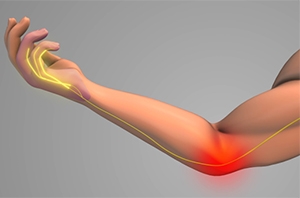
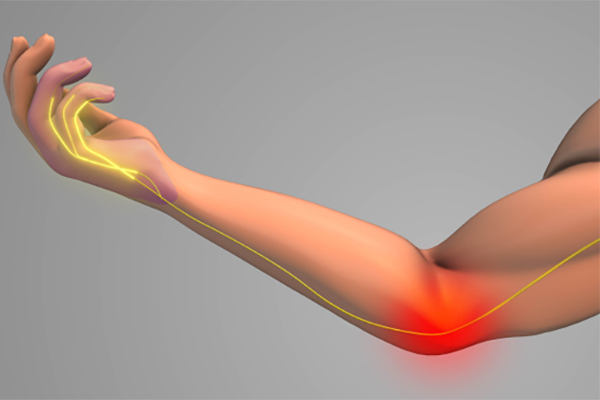
Cubital tunnel syndrome occurs when the ulnar nerve becomes compressed or irritated as it passes through a narrow passageway on the inside of the elbow, often referred to as the "funny bone" region. This nerve travels from the neck, down through the arm, around the elbow, and into the ring and pinky fingers, controlling sensation and fine motor function along the way.
When the nerve becomes compressed at the elbow, whether from prolonged bending, direct pressure, repetitive movement, or anatomical narrowing of the tunnel itself, patients typically notice tingling, numbness, or aching that radiates down the forearm into the ring and pinky fingers. As one of the most common nerve disorders affecting the upper extremity, cubital tunnel syndrome is increasingly recognized in patients who spend long hours with bent elbows, whether at a desk, behind the wheel, or holding a phone.
Why Cubital Tunnel and Carpal Tunnel Get Mixed Up
Carpal tunnel syndrome and cubital tunnel syndrome are frequently confused, and it is easy to understand why. Both conditions involve nerve compression in the arm, both produce tingling and numbness in the hand, and both tend to worsen with repetitive activity or awkward positioning over time. Carpal tunnel syndrome has also simply been part of the public vocabulary far longer, making it the default assumption whenever someone experiences hand numbness.
The key difference lies in which nerve is involved and where the compression occurs. Carpal tunnel syndrome affects the median nerve at the wrist, producing numbness primarily in the thumb, index, and middle fingers. Cubital tunnel syndrome affects the ulnar nerve at the elbow, producing numbness in the ring and pinky fingers instead. This distinction matters enormously, since a wrist brace intended for carpal tunnel will do very little for a nerve that is being compressed several inches away at the elbow.
Recognizing the Specific Symptoms of Cubital Tunnel Syndrome
Patients with cubital tunnel syndrome often describe symptoms that worsen with prolonged elbow bending, such as talking on the phone, sleeping with the arm curled, or resting on the elbow at a desk. A tingling or "electric" sensation shooting into the ring and pinky fingers when the elbow is bumped is another hallmark sign, since the nerve sits close to the skin's surface at that spot.
As the condition progresses, some patients notice weakness affecting fine motor tasks, such as difficulty with buttons, typing, or maintaining a grip on small objects. In more advanced cases, visible weakness or wasting of the small muscles in the hand can develop, which is one reason untreated nerve compression should not be dismissed as a minor annoyance.
Why an Accurate Diagnosis Changes Everything
Because cubital tunnel and carpal tunnel syndrome share overlapping symptoms in some patients, and because it is possible to have both conditions simultaneously, an accurate diagnosis is essential before starting treatment. A detailed history focusing on which fingers are affected, what positions worsen symptoms, and how the discomfort behaves throughout the day gives a specialist important clues. A physical exam assessing nerve sensitivity at the elbow versus the wrist, along with nerve conduction studies when needed, can confirm exactly where the compression is occurring.
This precision matters because treatment approaches genuinely differ. Splinting for carpal tunnel focuses on keeping the wrist in a neutral position, while cubital tunnel management often centers on limiting elbow flexion, particularly at night, and modifying activities that involve resting on or bending the elbow repeatedly.
Treatment Options Ranging From Conservative to Surgical
Most cases of cubital tunnel syndrome are addressed conservatively at first. Activity modification, nighttime elbow splinting to prevent prolonged bending during sleep, and ergonomic adjustments at work or while driving can relieve pressure on the nerve for many patients. Anti-inflammatory approaches may also help reduce irritation in milder cases.
When conservative measures do not adequately relieve symptoms, or when nerve compression has progressed to include measurable weakness or muscle wasting, surgical treatment may be recommended. Ulnar nerve decompression or transposition procedures, which fall under the practice's broader minimally invasive and cutting-edge technologies offerings, aim to relieve pressure on the nerve and, in some cases, reposition it away from the area of compression. Following surgery, structured occupational therapy plays an important role in restoring strength, coordination, and function in the hand.
Frequently Asked Questions
How can I tell if I have carpal tunnel or cubital tunnel syndrome?
The location of numbness is the key indicator. Carpal tunnel syndrome typically affects the thumb, index, and middle fingers, while cubital tunnel syndrome affects the ring and pinky fingers, since it involves a different nerve compressed at a different location.
Why do my pinky and ring finger go numb at night?
Nighttime numbness in the ring and pinky fingers is often caused by cubital tunnel syndrome, since many people unknowingly sleep with their elbow bent for extended periods, which increases pressure on the ulnar nerve.
Can cubital tunnel syndrome go away without surgery?
Yes, many mild to moderate cases improve with activity modification, nighttime splinting to limit elbow bending, and ergonomic changes, though more advanced cases with persistent weakness may require surgical decompression.
Is cubital tunnel syndrome becoming more common?
Increased awareness and diagnosis, along with lifestyle factors such as prolonged phone use, desk work, and driving that involve sustained elbow flexion, appear to be contributing to more frequent recognition of cubital tunnel syndrome.
What happens if cubital tunnel syndrome is left untreated?
Untreated nerve compression can progress from intermittent tingling to constant numbness and eventually measurable hand weakness or muscle wasting, which is why early evaluation is recommended once symptoms become persistent.
Numbness and tingling in the hand deserve a precise diagnosis, not a guess based on which condition happens to be more familiar. If you are experiencing symptoms in your ring and pinky fingers that have not responded to typical carpal tunnel remedies, a conversation with a hand and upper extremity specialist can help identify the true source and the most effective path toward relief.
AUTHOR: Mark Cohen, MD – Orthopedic Hand, Wrist & Elbow Surgeon
Mark Cohen, MD is a board certified, fellowship trained distinguished orthopedic surgeon specializing in hand, wrist, elbow, and upper extremity surgery at Midwest Orthopaedics at Rush, with additional expertise in microvascular and reconstructive procedures. He is based in Chicago and has led the Orthopaedic Hand and Elbow Section at Rush University for more than three decades while also serving as Director of Orthopaedic Education in the department.
Credentials & Recognition
Dr. Cohen earned his undergraduate degree from Stanford University. and his medical degree from Harvard Medical School, graduating Magna Cum Laude. He completed his orthopedic surgery residency at the University of California, followed by an advanced fellowship in hand, upper extremity, and microvascular surgery at the Indiana Hand Center, one of the nation's leading hand surgery training programs.
Dr. Cohen has been recognized numerous times as one of Chicago's "Top Doctors" in Hand and Orthopaedic Surgery by Chicago Magazine including in 2025 and in multiple prior editions since 1997. U.S. News & World Report ranks him among the top 1% of physicians nationwide in his specialty, and he has been named a Castle Connolly Top Doctor — a distinction awarded to less than 7% of physicians across the country. In 2017, he received the Excellence in Clinical Service Award from Rush University for his outstanding contributions to patient care, leadership, and scholarship.
Clinical Expertise
Dr. Cohen’s clinical and research interests focus on fractures and reconstruction of the hand, wrist, and elbow, minimally invasive upper extremity surgery, and complex elbow conditions, including Tommy John surgery for throwing athletes and other sports-related injuries. A prolific academic contributor, he has authored more than 163 peer-reviewed medical articles, 63 book chapters, and a textbook on hand and wrist injuries. He also serves as an editor for Green’s Operative Hand Surgery, the leading textbook in the field.
Dr. Cohen has participated in over 334 continuing medical education courses and has served as Course Chairman 51 times. In addition to his academic leadership, he is a team physician and consultant for the Chicago White Sox and the Chicago Bulls, providing expert care for elite athletes.
Medical Disclaimer: This information is for educational purposes only and does not constitute medical advice. For diagnosis and treatment recommendations, please consult with Dr. Cohen or another qualified orthopedic specialist.
Content authored by Dr. Mark Cohen and verified against official sources.