
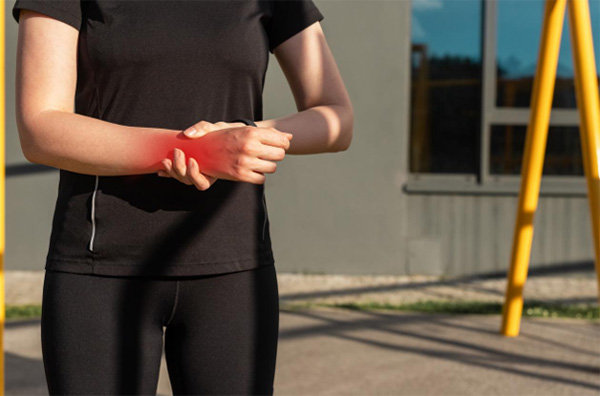
Every summer, athletes of all ages fall on an outstretched hand, on the basketball court, the soccer field, the skateboard ramp, or the gymnastics mat, and walk away convinced they have a sprain. The wrist is sore, there is no obvious deformity, minimal if any swelling, and the pain seems manageable. But a subset of those athletes has fractured their scaphoid bone, and without accurate diagnosis and timely treatment, the consequences can be permanent.
What Is the Scaphoid and Why Does It Fracture So Often?
The scaphoid is a small, peanut-shaped bone located on the thumb side of the wrist, nestled between the forearm bones and the tubular metacarpal bones of the hand. It is the most commonly fractured carpal bone in the wrist, accounting for approximately 60–70% of all carpal fractures, and it is disproportionately common in active adolescents and young adults, precisely the population most active in summer sports.
The mechanism is almost always the same: a fall onto an outstretched hand with the wrist extended and the thumb side bearing the impact. Skateboarding, inline skating, gymnastics, basketball, and contact sports all produce this mechanism with regularity during peak summer activity months.
Why Scaphoid Fractures Are So Frequently Missed
The clinical challenge of the scaphoid fracture is straightforward: it frequently looks and feels like a sprain. There is no dramatic deformity. Swelling may be mild. The patient can often move the wrist through a reasonable range of motion. And critically, a standard X-ray taken immediately after injury can appear completely normal in up to 20% of scaphoid fractures, because the fracture line is often too subtle to visualize in the acute phase.
The result is a patient who is reassured, given a wrist brace, and sent home with instructions to rest. Weeks later, sometimes months later, persistent wrist pain on the thumb side prompts further investigation, and an MRI or CT scan reveals a fracture that has been present all along. By that point, the window for optimal non-surgical management may have narrowed considerably.
The most reliable clinical indicator that distinguishes a scaphoid fracture from a wrist sprain is point tenderness in the anatomical snuffbox, the small depression on the thumb side of the wrist just below the base of the thumb. A wrist sprain typically produces more diffuse tenderness across the joint, while scaphoid fractures produce highly localized pain in this specific anatomical location. In the presence of the right mechanism and snuffbox tenderness, a scaphoid fracture must be suspected even when initial imaging appears normal.
Why Timely Diagnosis Changes Everything
The scaphoid has a precarious blood supply. The majority of its blood flow enters from the distal pole, the far end, meaning that fractures at the waist or proximal pole of the bone risk disrupting circulation to the fragment. When a scaphoid fracture is left undiagnosed and the athlete continues to load the wrist through sport, the serious complication of non-union becomes increasingly likely. Non-union occurs when the fracture fails to heal and the bone fragments remain permanently separated. Acutely recognized fractures can often be surgically treated when necessary with minimally invasive techniques including percutaneous screw placement. The direct bone to bone apposition allows for rapid healing and usually obviates the need for supplementary bone grafting. Scaphoid non-union poses an entirely different challenge, since if left unchecked it invariably leads to joint arthritis and stiffness in the future. Surgical realignment and fixation of the scaphoid is imperative to prevent that arthritis if it hasn’t yet occurred, and this is much more complex than acutely treated fractures. These reconstructions often require multiple incisions, more complex carpentry to get the bone aligned, bone grafting (bone brought in from elsewhere to fill any gaps), and have much more prolonged healing times than acutely treated fractures.
Treatment Options: From Non-Surgical to Surgical
Stable, non-displaced scaphoid fractures, particularly those at the distal pole, can be successfully managed with cast immobilization over six to eight weeks, with periodic imaging to confirm healing progression. However, displaced fractures at the waist, almost any fracture of the proximal pole, and fractures in athletes with a high return-to-sport priority are increasingly managed withopen reduction and screw fixation, a procedure that compresses the fracture site, accelerates healing, and can reduce the period of immobilization compared to casting alone.
Minimally invasive and cutting-edge surgical techniques at the Hand, Wrist & Elbow Institute allow scaphoid fixation to be performed through incisions of less than one centimeter, preserving surrounding soft tissue and supporting the fastest possible return to sport.
When to Seek Evaluation After a Wrist Injury
Any athlete who falls on an outstretched hand and reports persistent tenderness specifically on the thumb side of the wrist should be evaluated by an upper extremity specialist regardless of what the initial X-ray shows. If you are managing wrist pain that has not resolved two weeks after a fall, or if a prior evaluation attributed symptoms to a sprain without advanced imaging, the wrist specialists at the Hand, Wrist & Elbow Institute can provide the subspecialty evaluation and imaging needed to rule out a missed fracture before complications develop.
Request an appointment online or call us.
Frequently Asked Questions
1. How do I know if I fractured my scaphoid or just sprained my wrist?
The most reliable clinical indicator is point tenderness in the anatomical snuffbox, the small depression on the thumb side of the wrist just below the base of the thumb. Wrist sprains typically produce more diffuse tenderness. Because a normal X-ray does not rule out a scaphoid fracture, any persistent snuffbox tenderness after a fall warrants specialist evaluation and potential advanced imaging.
2. Can a scaphoid fracture heal on its own without surgery?
Stable, non-displaced fractures at the distal pole and waist of the scaphoid can heal with cast immobilization alone over six to eight weeks. However, fractures at the proximal pole, displaced fractures, and fractures in athletes who need to return to sport or light labor workers looking to return to work promptly are more reliably treated with minimally invasive screw fixation, which accelerates healing and can reduce immobilization time.
3. What happens if a scaphoid fracture goes untreated?
Untreated scaphoid fractures risk the development of non-union, which can lead to progressive wrist arthritis and significantly reduced long-term wrist function, and is far more complex to treat than the original fracture would have been.
4. How long does recovery take after scaphoid fracture surgery?
Recovery following minimally invasive screw fixation typically involves 6 weeks of protected immobilization followed by progressive rehabilitation. Most athletes return to non-contact sport within six to eight weeks and full contact sport within ten to twelve weeks, depending on fracture location, fixation quality, and sport-specific demands.
5. Are young athletes at higher risk for scaphoid fractures than adults?
Adolescent and young adult athletes are disproportionately represented in scaphoid fracture statistics due to the high volume of fall-producing sport activity in this age group. The scaphoid is also the carpal bone most exposed to impact force during a fall on an outstretched hand across all age groups, making it the most frequently fractured carpal bone in active individuals.
Reference Links:
- Scaphoid Fracture of the Wrist - OrthoInfo from the American Academy of Orthopaedic Surgeons
- Non-FOOSH Scaphoid Fractures in Young Athletes - PubMed Central
AUTHOR: Robert Wysocki, MD – Board-Certified Orthopedic Hand, Wrist & Elbow Surgeon
Dr. Robert Wysocki is a board-certified orthopedic surgeon specializing in hand, wrist, and elbow conditions, with additional board certification in hand surgery. He serves as an Associate Professor at Rush University Medical Center, where he focuses on treating traumatic, degenerative, and acquired disorders of the upper extremity. His clinical approach emphasizes restoring function, relieving pain, and helping patients return to meaningful daily activities.
Credentials & Recognition
Dr. Wysocki earned his undergraduate degree from The College of William and Mary and his medical degree from Northwestern University Feinberg School of Medicine. He completed his orthopedic surgery residency at Rush University Medical Center, where he was honored with the Surgical Intern of the Year Award. He then pursued advanced fellowship training in hand, upper extremity, and microvascular surgery at Duke University Medical Center.
A recognized leader in his field, Dr. Wysocki has received the Jorge O. Galante, M.D., D.Med.Sci. Research Award twice and has served as a principal investigator and co-investigator on grants from the National Institutes of Health. He has been selected for prestigious programs including the American Orthopaedic Association Emerging Leaders Program and the American Society for Surgery of the Hand Young Leaders Group.
Clinical Expertise
Dr. Wysocki specializes in advanced surgical and non-surgical treatment of hand, wrist, and elbow conditions, including fractures, tendon injuries, nerve disorders, and arthritis. His expertise includes microsurgical techniques and procedures designed to preserve motion and restore function.
An active contributor to orthopedic research and education, Dr. Wysocki has authored more than 75 peer-reviewed articles and 20 book chapters, and has delivered nearly 100 presentations at national and international meetings. He also teaches surgeons through leading organizations such as the American Society for Surgery of the Hand and the American Academy of Orthopaedic Surgeons. Known for his patient-centered approach, Dr. Wysocki is committed to understanding each patient’s goals and helping them return to the activities that matter most.
Medical Disclaimer: This information is for educational purposes only and does not constitute medical advice. For diagnosis and treatment recommendations, please consult with Dr. Wysocki or another qualified orthopedic specialist.
Content authored by Dr. Robert Wysocki and verified against official sources.