
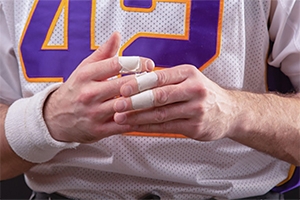
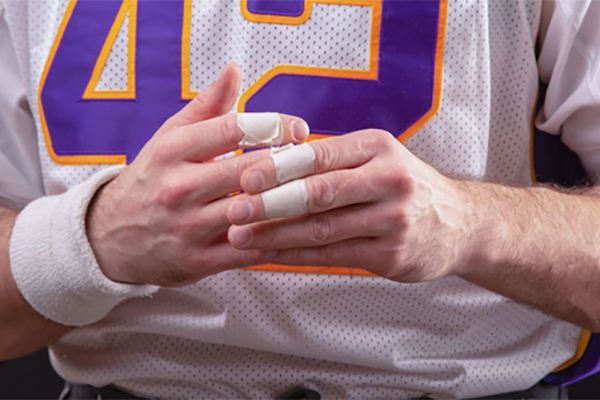
Longer days and warmer weather bring a surge in outdoor activity, from pickup basketball games to cycling, tennis, and weekend DIY projects. While these activities keep you active, they also increase the risk of hand and wrist injuries that can quickly interrupt your routine. Here’s a look at the most common summer sports injuries of the hand and how to prevent them.
Common Hand and Wrist Injuries Seen in the ER During Summer
Emergency departments often see a predictable rise in hand injuries during summer months. In fact, research suggests that up to 25% of all sports-related injuries involve the hand or wrist.¹Among the most common are finger fractures, wrist sprains, and tendon injuries. Ball sports like basketball and volleyball frequently lead to “jammed fingers” or ligament tears, while falls during cycling or running often result in wrist fractures, particularly distal radius fractures. Lacerations from outdoor tools or recreational equipment are also common and may involve deeper structures like tendons or nerves.
Why Summer Sports Increase Hand Injury Risk
Summer activities often involve higher intensity, less structure, and unfamiliar environments. Uneven playing surfaces, poor lighting in evening games, and fatigue all contribute to compromised coordination and reaction time. Additionally, many individuals jump into seasonal sports without proper conditioning, placing extra strain on the small joints and soft tissues of the hand and wrist. Without adequate preparation, even minor missteps can lead to significant injury.
Warning Signs You Shouldn’t Ignore
Not all injuries require an ER visit, but certain symptoms should prompt immediate evaluation. Notable swelling or bruising, visible deformity, significantly limited motion, numbness, or deep cuts are signs of potentially serious damage. Delaying treatment for fractures or tendon injuries can lead to long-term stiffness, weakness, or loss of function. Early diagnosis is key to preserving hand mechanics and ensuring proper healing.
How to Prevent Hand and Wrist Injuries in Summer Sports
Prevention starts with preparation. Warm up your hands and wrists before activity, especially for sports involving gripping or impact. Wearing appropriate protective gear, such as wrist guards for skating or cycling, can significantly reduce injury risk. Focus on strengthening exercises that improve grip strength and wrist stability, and avoid overuse by allowing time for recovery between activities. Being mindful of your environment and using proper technique can further minimize risk.
Treatment and When to See a Specialist
Many minor injuries can be managed with rest, ice, compression, and elevation. However, injuries demonstrating any of the warning signs above should be evaluated by a specialist. Hand and wrist injuries are complex, and even small issues can have lasting effects if not treated properly. Consulting an orthopedic surgeon with expertise in upper extremity care ensures accurate diagnosis and a treatment plan tailored to restore function and mobility.
Staying active during the summer is important, but protecting your hands is just as critical. If you notice lingering symptoms or a change in hand function after an injury, a specialized evaluation can help prevent long-term complications and keep you performing at your best.
FAQs
1. What is the most common hand injury during summer sports?
Finger injuries, including sprains and fractures from ball sports, are among the most frequently reported.
2. When should I go to the ER for a hand injury?
Seek immediate care if you have severe pain, major swelling/bruising, deformity, numbness, or cannot move your fingers or wrist.
3. Can a jammed finger heal on its own?
Some minor sprains can heal with rest, but persistent pain or swelling should be evaluated to rule out fractures or ligament tears.
4. How can I protect my wrists during sports?
Use protective gear like wrist guards, strengthen supporting muscles, and maintain proper technique during activities.
5. Do all hand injuries require surgery?
No, many can be treated non-surgically, but proper evaluation is important to determine the best approach.
Reference Links:
AUTHOR: Dr. Robert Wysocki, MD – Board-Certified Orthopedic Hand, Wrist & Elbow Surgeon
Dr. Robert Wysocki is a board-certified orthopedic surgeon specializing in hand, wrist, and elbow conditions, with additional board certification in hand surgery. He serves as an Associate Professor at Rush University Medical Center, where he focuses on treating traumatic, degenerative, and acquired disorders of the upper extremity. His clinical approach emphasizes restoring function, relieving pain, and helping patients return to meaningful daily activities.
Credentials & Recognition
Dr. Wysocki earned his undergraduate degree from The College of William and Mary and his medical degree from Northwestern University Feinberg School of Medicine. He completed his orthopedic surgery residency at Rush University Medical Center, where he was honored with the Surgical Intern of the Year Award. He then pursued advanced fellowship training in hand, upper extremity, and microvascular surgery at Duke University Medical Center.
A recognized leader in his field, Dr. Wysocki has received the Jorge O. Galante, M.D., D.Med.Sci. Research Award twice and has served as a principal investigator and co-investigator on grants from the National Institutes of Health. He has been selected for prestigious programs including the American Orthopaedic Association Emerging Leaders Program and the American Society for Surgery of the Hand Young Leaders Group.
Clinical Expertise
Dr. Wysocki specializes in advanced surgical and non-surgical treatment of hand, wrist, and elbow conditions, including fractures, tendon injuries, nerve disorders, and arthritis. His expertise includes microsurgical techniques and procedures designed to preserve motion and restore function.
An active contributor to orthopedic research and education, Dr. Wysocki has authored more than 75 peer-reviewed articles and 20 book chapters, and has delivered nearly 100 presentations at national and international meetings. He also teaches surgeons through leading organizations such as the American Society for Surgery of the Hand and the American Academy of Orthopaedic Surgeons. Known for his patient-centered approach, Dr. Wysocki is committed to understanding each patient’s goals and helping them return to the activities that matter most.
Medical Disclaimer: This information is for educational purposes only and does not constitute medical advice. For diagnosis and treatment recommendations, please consult with Dr. Wysocki or another qualified orthopedic specialist.