
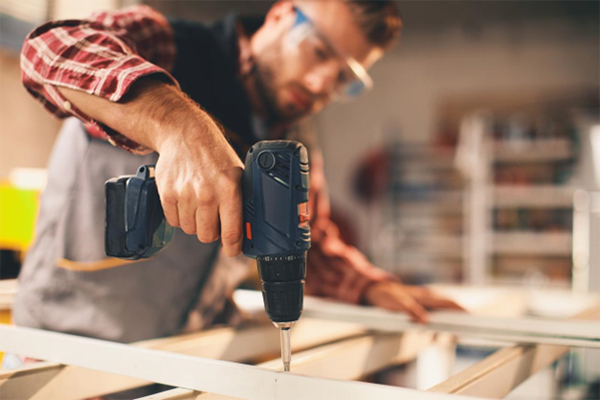
From the bustling construction sites in the Loop to the high-speed assembly lines in our industrial corridors, Chicago’s workforce is the backbone of this city. However, when a sudden accident or repetitive strain affects your hands, it can threaten your livelihood and independence. Let’s explore some treatment options for hand injuries that can get you back to work safely.
Common Occupational Hand Injuries in Chicago
In a major hub like Chicago, workplace injuries often fall into two categories: acute trauma and repetitive stress. Our city sees a high volume of the following:
- Crush Injuries and Fractures: Frequent in construction and heavy manufacturing, often involving heavy machinery or falling objects.
- Lacerations and Nerve Damage: Common among chefs, tradespeople, and industrial workers using sharp tools or glass.
- Repetitive Strain (Carpal Tunnel & Trigger Finger): Highly prevalent in office settings and logistics centers where repetitive gripping or typing is constant.
Understanding Your Treatment Rights in Illinois
Under the Illinois Workers’ Compensation Act, Chicago workers have specific protections. Notably, you are typically entitled to choose your own physician (within certain network guidelines).1 It is vital to see a hand specialist rather than a general practitioner, as the intricate anatomy of the hand, containing 27 bones and a dense network of nerves, requires specialized diagnostic precision to ensure a full functional recovery.
Advanced Non-Surgical Solutions for Hand Injuries
Surgery isn't always the first step. For many Chicago workers, we utilize a "rehabilitation-first" approach to minimize downtime:
- Custom Splinting: Fabricated by hand therapists to protect the injury while allowing movement in unaffected fingers.
- Steroid Injections: Highly effective for inflammatory conditions like Trigger Finger or De Quervain’s Tenosynovitis.
- Guided Hand Therapy: Specialized exercises designed to restore grip strength and dexterity, specifically tailored to your job's physical demands.
Minimally Invasive Surgical Innovations
When surgery is necessary, modern techniques focus on "micro-incisions" to speed up the healing process. For example, a mini-incision Carpal Tunnel Release allows for a faster return to the workforce compared to traditional open surgery. For more complex traumas, such as tendon ruptures or bone breaks, we use internal fixation (pins or screws) that stabilizes the hand, often allowing for "early protected motion" to prevent the stiffness that can sideline a worker for months.
The Path Back to the Job
Successful recovery from injury is also about work hardening. This phase of treatment involves simulating your actual work tasks, whether that’s swinging a hammer, operating a forklift, or typing, to ensure your hand can handle the real world stress of your job.
Our goal at The Hand, Wrist & Elbow Institute is to ensure that when you return to the site, you do so with the strength and confidence to perform your duties without the risk of re-injury.
Frequently Asked Questions
1. What are the most common work-related hand injuries?
Common workplace hand injuries include fractures, crush injuries, lacerations, nerve damage, carpal tunnel syndrome, and trigger finger caused by repetitive movements or heavy machinery.
2. Do all hand injuries require surgery?
No. Many hand injuries can be treated with non-surgical options such as splinting, steroid injections, and specialized hand therapy to restore strength and function.
3. How long does it take to recover from a hand injury?
Recovery time depends on the type and severity of the injury. Minor strains may heal in weeks, while fractures or tendon injuries may require several months of treatment and rehabilitation.
4. When should I see a hand specialist after a workplace injury?
You should seek evaluation as soon as possible after a hand injury. Early diagnosis and specialized care can help prevent long-term stiffness, weakness, or nerve damage.
Reference Links:
1. 2018 Illinois Compiled Statutes Chapter 820 - EMPLOYMENT 820 ILCS 305/ - Workers' Compensation Act - JUSTIA U.S. Law
AUTHOR: John J. Fernandez, MD – Orthopedic Hand, Wrist & Elbow Surgeon
Dr. John J. Fernandez is board certified fellowship trained orthopedic surgeon specializing in hand, wrist, and elbow surgery at Midwest Orthopaedics at Rush with expertise in microsurgery and complex upper extremity reconstruction. He serves as Director of Microsurgery and is an Assistant Professor at Rush University Medical Center. Dr. Fernandez is widely recognized for advancing minimally invasive surgical techniques and developing innovative implants used in hand and upper extremity surgery.
Credentials & Recognition
Dr. Fernandez earned his medical degree Magna Cum Laude from Northeastern Ohio College of Medicine He completed his orthopedic surgery residency at the University of Pittsburgh Medical Center where he also served as editor of the Pittsburgh Orthopaedic Journal. He then pursued advanced fellowship training in hand and microsurgery at the prestigious Indiana Hand Center.
He is board certified by the American Board of Orthopaedic Surgery (ABOS) and holds a Certificate of Added Qualification in Hand Surgery. Dr. Fernandez is a Fellow of the American Academy of Orthopaedic Surgeons (AAOS) and a member of the American Association for Hand Surgery and the American Society for Surgery of the Hand. He has also been honored with the Golden Apple Teaching Award for excellence in educating residents and fellows.
Clinical Expertise
Dr. Fernandez specializes in minimally invasive surgery of the hand, wrist, and elbow, with advanced expertise in microsurgical procedures, traumatic limb reconstruction, and complex deformity correction. As Director of Microsurgery at Midwest Orthopaedics at Rush, he has performed hundreds of intricate microsurgical procedures, including limb replantation and reconstruction following severe injuries. He also serves as an Assistant Professor at Rush University Medical Center.
In addition to his clinical work, Dr. Fernandez is an active researcher and educator who has contributed to leading orthopedic journals and textbooks. He frequently lectures at national and international courses and serves as a team physician for the Chicago White Sox, Chicago Bulls and Chicago Steel, providing specialized care for elite athletes.
Medical Disclaimer: This information is for educational purposes only and does not constitute medical advice. For diagnosis and treatment recommendations, please consult with Dr. Fernandez or another qualified orthopedic specialist.